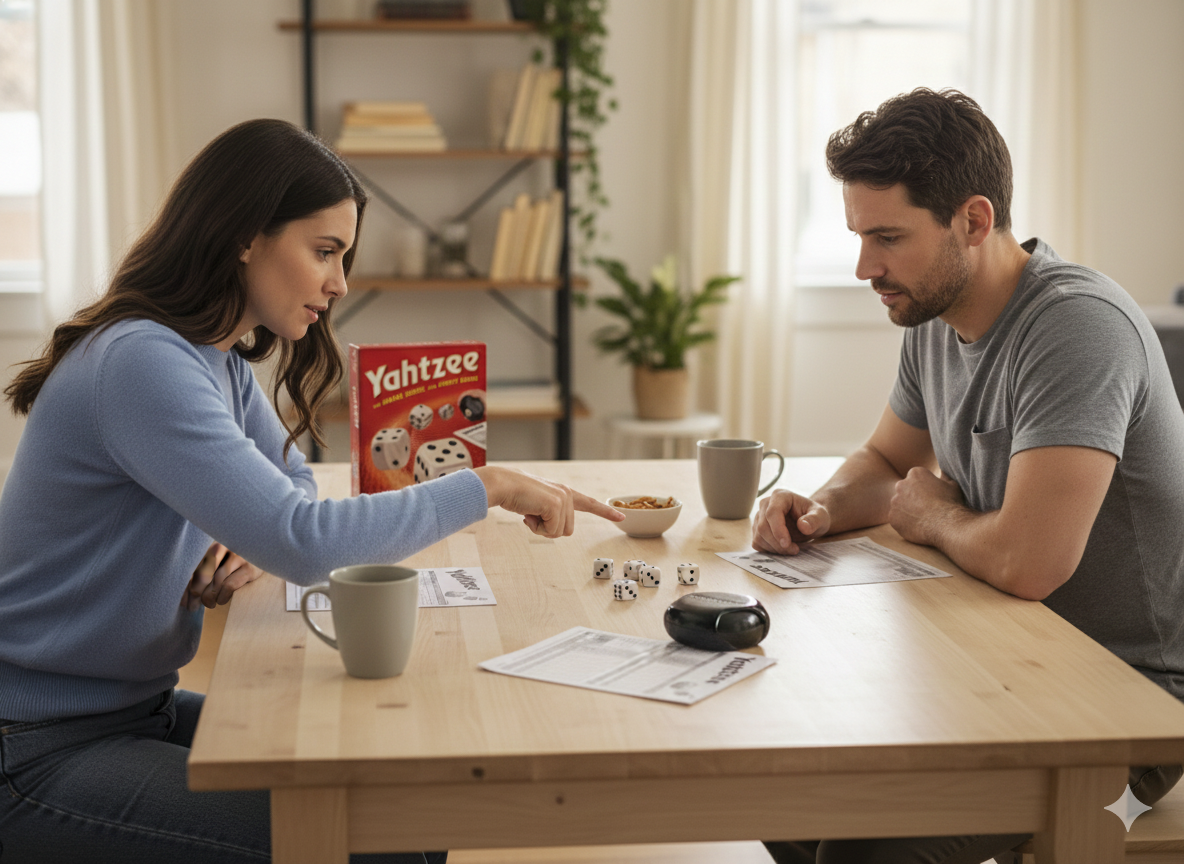
There’s something magical about gathering around a table, opening a brand new game box, and diving into rules you’ve never encountered before. That moment of collective confusion that transforms into understanding, strategy, and laughter—it’s a uniquely human experience that’s becoming rarer in our screen-saturated world.
In our household, learning a new game on New Year’s Eve has become a cherished tradition. As the clock ticks toward midnight, my husband and I push aside the party hats and noise makers, spread out a game board we’ve never played before, and stumble through the rulebook together. Some years we master it quickly; other years we’re still arguing about a rule interpretation at 11:45 PM. But every single year, we start January 1st with something new in our repertoire—a shared experience that becomes part of our story, a game we’ll play again and again throughout the year ahead.
If you’re looking for a New Year hobby that exercises your brain, strengthens relationships, and creates lasting memories, learning new games might be the perfect resolution for 2026.
Disclosure: This post contains affiliate links, which means I may earn a small commission if you make a purchase through these links, at no additional cost to you. I only recommend products I genuinely believe support executive function development and that have proven educational value. Your support helps me continue creating helpful content in this problem-solving series!
Why Learning New Games Is the Ultimate Brain Workout
When you sit down to learn a new game, you’re not just memorizing rules—you’re engaging multiple cognitive systems simultaneously in ways that few other activities can match.
Strategic thinking and planning come into immediate play as you evaluate options, anticipate consequences, and develop both short-term tactics and long-term strategies. Your brain’s executive function—the mental command center responsible for planning, decision-making, and impulse control—gets a comprehensive workout with every turn.
Working memory and attention are constantly engaged as you track game states, remember opponent moves, hold multiple rules in mind, and process new information while maintaining awareness of your overall strategy. This mental juggling strengthens neural pathways and can improve memory performance in everyday life.
Problem-solving and adaptability are crucial game skills. No plan survives contact with reality—or with your opponent’s surprising move. Games teach you to think on your feet, reassess situations quickly, and pivot strategies when circumstances change. This cognitive flexibility translates directly to real-world challenges.
Pattern recognition and probability assessment develop naturally through gameplay, whether you’re calculating odds in a dice game, recognizing card sequences, or anticipating opponent behavior based on past patterns. These analytical skills strengthen mathematical thinking and risk assessment abilities.
Perhaps most importantly, games provide social-emotional intelligence training. Reading other players, managing competitive emotions, practicing good sportsmanship, and navigating the social dynamics of turn-taking and cooperation all contribute to emotional regulation and interpersonal skills.
The New Year Advantage: Why January Is Perfect for Game Learning
Starting the new year by learning games creates multiple psychological and practical benefits that make January the ideal time to begin this hobby.
Fresh start motivation is real. The new year brings renewed energy and commitment to self-improvement. Unlike punishing resolutions focused on deprivation, learning games is inherently rewarding—you’re adding joy and connection to your life, not taking anything away. This positive reinforcement makes it far more likely you’ll stick with the habit throughout the year.
Winter nights made meaningful. January’s long, cold evenings practically beg for indoor activities. Rather than defaulting to endless scrolling or television binges, game nights transform those dark hours into engaged, active experiences. You’re using time that might otherwise feel wasted to build skills and relationships.
Building traditions and habits. Starting a game-learning practice in January gives you twelve months to establish it as a genuine tradition. By next December, you’ll have a full year of shared game experiences, inside jokes, and memories that wouldn’t exist otherwise. Family traditions aren’t inherited—they’re created, one intentional choice at a time.
Accessible for everyone. Unlike hobbies that require expensive equipment, special spaces, or particular physical abilities, learning games is remarkably democratic. From young children to elderly grandparents, from competitive strategists to casual players, games scale to meet people where they are. This makes it perfect for New Year resolutions that involve the whole family.
Solo Play, Group Fun, and Everything In Between
One of the greatest strengths of game learning is its remarkable versatility across social contexts.
Solo gameplay has experienced a renaissance in recent years. Many modern games include robust solo modes or cooperative challenges where you play against the game itself. This means your hobby doesn’t depend on coordinating schedules with others. You can practice strategies, learn rules at your own pace, and enjoy meaningful mental engagement even on nights when you’re home alone. Solo gaming provides the brain benefits without requiring social energy—perfect for introverts or busy schedules.
Couple connection deepens through shared gameplay. For my husband and me, our New Year’s Eve game tradition has become something we look forward to all year. Learning together creates a unique form of intimacy—you’re problem-solving as a team, laughing at mistakes, and building shared competence. Two-player games offer regular date night options that are more engaging than dinner-and-a-movie and significantly cheaper than most entertainment options.
Family bonding happens naturally around game tables. When phones are set aside and everyone’s focused on the same challenge, real conversation emerges. Games provide structure that makes interaction easier for families with mixed ages, different personalities, or members who struggle with unstructured social time. The shared goal creates unity, while the gameplay provides natural talking points and teachable moments about strategy, probability, and graceful winning or losing.
Multi-generational magic occurs when games bridge age gaps. A well-chosen game allows a six-year-old and a sixty-year-old to compete on relatively equal footing, creating cross-generational memories and mutual respect. Grandparents teach strategy; grandchildren teach game mechanics; everyone contributes something unique to the experience.
14 Perfect Games to Launch Your Learning Journey
Ready to start your game-learning adventure? Here are fourteen fantastic options spanning different styles, complexity levels, and player counts to help you find your perfect match.
Mystery Games: Sharpen Your Deductive Reasoning
Spy Alley
Welcome to the world of espionage where nothing is as it seems. In Spy Alley, players move around the board collecting items while trying to guess opponents’ secret identities before their own is revealed. The psychological gameplay—knowing when to advance your own agenda versus when to deduce others’ secrets—creates delicious tension. It’s accessible enough for family game night but deep enough that adults will genuinely enjoy the mental chess match. Perfect for 2-6 players who love bluffing, deduction, and trying to read their opponents’ poker faces.
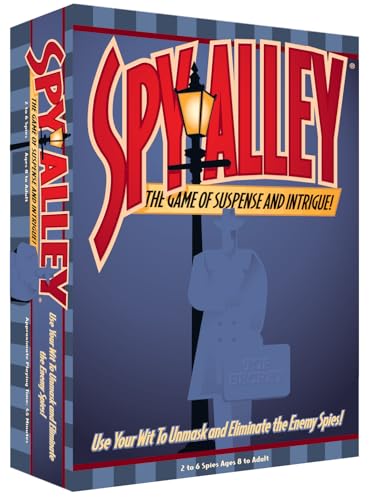
- AWARD-WINNING STRATEGY GAME: Spy Alley Won Mensa’s Best Mind Game, a highly sought-after award only few games ever win. …
- HIGH REPLAYABILITY FOR ALL AGES: Like beloved classics such as Chess, Checkers, and Risk, Spy Alley was designed for Adu…
- THE PERFECT HOLIDAY GIFT & GATHERING GAME: This classic strategy game is an ideal gift for teens, families, and adults. …
Clue Board Game
The timeless classic that taught generations how to think like detectives. This updated version maintains everything that made Clue legendary—deductive reasoning, systematic elimination, careful note-taking—while refreshing the experience for modern players. As you move through the mansion gathering clues, you’re exercising logic skills and learning to track complex information mentally. The “aha!” moment when you finally crack the case delivers genuine satisfaction. Ideal for 2-6 players and perfect for those who loved mystery novels as kids.
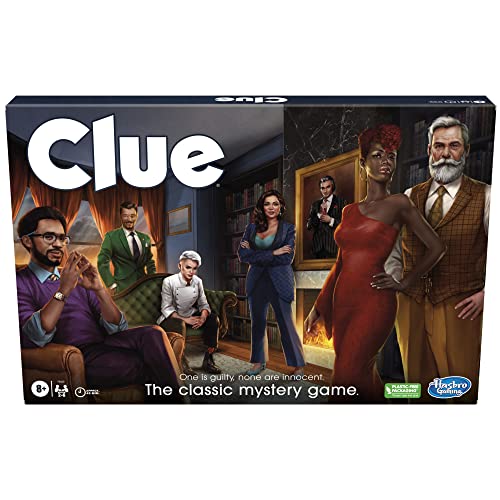
- THE CLUE GAME, REIMAGINED: This Clue game combines classic Clue gameplay with richly reimagined takes on the original mu…
- SOLVE THE MYSTERY: Who killed Boddy Black? Collect clues and race to be the first to figure out who committed the murder…
- 6 SUSPECTS, 1 MURDER: Play as Miss Scarlett, Colonel Mustard, Mayor Green, Chef White, Solicitor Peacock, or Professor P…
Trivia Games: Exercise Your Memory Banks
Wits & Wagers
Brilliantly designed trivia that welcomes both know-it-alls and know-nothings. You don’t need to know the exact answer—you just need to guess which player’s answer is closest. This betting mechanic means you can win even if your own trivia knowledge is limited, making it perfect for mixed-knowledge groups. The game rewards both factual knowledge and social intelligence (who in your group would know about 1970s sports statistics?). Fast-paced and genuinely funny, it’s become a party game staple. Great for 3-7 players who want trivia without the intimidation factor.

- MOST AWARD-WINNING PARTY GAME IN HISTORY – Get ready for endless fun and learning with the best rated party game for fam…
- A TRIVIA GAME ANYONE CAN PLAY – Wits & Wagers is the hit game where don’t need to know the answers to win. The real fun …
- ENJOY A PARTY ATMOSPHERE – Experience the thrill of the casino with a high-rolling trivia gaming experience! Get lucky, …
Wit’s End
A trivia game that goes beyond simple question-and-answer to include creative thinking, problem-solving, and lateral thinking challenges. Questions span diverse categories—some test knowledge, others test logic, and some just test how weird your brain works. The variety keeps every player engaged regardless of their individual strengths. It’s cerebral without being pretentious, and the mix of question types means everyone gets their moment to shine. Perfect for 2-6 players who appreciate thinking outside the box.

- Think You’re Smart? Prove It! — Wit’s End is a challenging trivia and brain-teasing board game where players battle wits…
- Teaser — Can you crack the riddle? — These fun and tricky rhyming riddles will have you scratching your head as you try …
- Odd-1-Out — Which one doesn’t belong? — You’ll be given four terms, but only three share something in common. Your job i…
Strategy Games: Master Planning and Probability
Ticket to Ride
The gateway strategy game that’s converted countless casual players into board game enthusiasts. The concept is beautifully simple: collect colored train cards and claim railway routes across a map. The execution is wonderfully strategic: which routes do you prioritize? When do you risk waiting for specific cards versus claiming available routes? Do you block opponents or focus on your own goals? Every decision matters, yet the game never feels overwhelming. The gorgeous board and satisfying plastic trains create a premium experience. Perfect for 2-5 players and an absolute must-have for any collection.

- EXCITING TRAIN ADVENTURE: Embark on a journey across early 20th century North America, collecting train cards and claimi…
- EASY TO LEARN, HARD TO MASTER: With simple rules and engaging gameplay, Ticket to Ride is perfect for both new and exper…
- BEAUTIFUL GAME COMPONENTS: Features a giant map of the North American train network, accompanied by miniature trains for…
Forbidden Island
A cooperative game where players work together to collect treasures from a sinking island before it disappears beneath the waves. The collaborative nature makes it perfect for families, teaching teamwork and shared decision-making without the hurt feelings that competitive games sometimes create. Each player has unique abilities that must be leveraged strategically, and the rising water adds escalating tension that keeps everyone engaged. The game scales difficulty beautifully, providing challenge for experienced players while remaining accessible to newcomers. Ideal for 2-4 players who prefer cooperation over competition.

- STRATEGIC ADVENTURE: From renowned game creator, Matt Leacock, Forbidden Island offers a cooperative strategy experience…
- INNOVATIVE GAMEPLAY: Features rich illustrations and dynamic gameplay mechanics; This game stands out with its unique ch…
- FAMILY-FRIENDLY FUN: Designed for ages 10 and up, accommodates 2 to 4 players; Perfect for family game nights, fostering…
Card Games: Portable Brain Training
Phase 10
A rummy-style card game where players race through ten increasingly challenging phases—collecting sets, runs, and specific card combinations. What makes Phase 10 brilliant is that everyone’s working toward different goals simultaneously. While you’re trying to collect seven cards of one color, your opponent might be gathering a run of eight cards. This asymmetry keeps the game fresh and prevents the predictable patterns that plague simpler card games. The escalating difficulty provides built-in progression that keeps players engaged game after game. Perfect for 2-6 players and excellent for family game nights.

- Phase 10, the rummy-type card game with a twist, comes in a colorful storage tin convenient for travel and portable fun!
- Players race to complete 10 varied phases that include cards with the same color, runs, sets or a combination of runs an…
- Each phase is specific for each hand — those who complete the Phase advance to the next, but those who do not must try …
Spoons
Fast, frantic, and outrageously fun. Players frantically pass cards trying to collect four of a kind, and when someone succeeds, everyone dives for spoons in the center of the table. The last player without a spoon is eliminated. It’s simple enough to explain in thirty seconds but creates hilarious chaos that has players begging for rematches. The physical component (grabbing spoons) makes it kinetic and exciting, especially for kids or anyone who finds purely mental games exhausting. Warning: things can get competitive. Great for 3-13 players who don’t mind a little friendly mayhem.

- FAST-PACED FAMILY FUN – Race to collect four-of-a-kind and grab a spoon before anyone else! A classic card game for kids…
- EASY TO LEARN, QUICK TO PLAY – Simple rules make it perfect for family game nights, parties, and holidays. Play again an…
- TRAVEL-FRIENDLY & COMPACT CASE – The portable storage case keeps spoons and cards organized, making this the best travel…
Dice Games: Embrace Probability and Push Your Luck
Yahtzee Game
The grandfather of dice games remains popular for good reason. Rolling for specific combinations—three of a kind, full house, straights, and the elusive Yahtzee (five of a kind)—teaches probability assessment in the most enjoyable way possible. The decision points are clear: which dice to keep, which to reroll, when to play it safe versus when to gamble for a high-value combination. The game moves quickly, offers genuine strategic depth, and creates satisfying tension with every roll. Perfect for 1+ players (yes, solo Yahtzee is legitimately fun) and ideal for ages 8 to 80.

- DICE-ROLLIN’ BATTLE: Shake it up and get rolling! This Yahtzee game features classic Yahtzee gameplay. It’s fast-paced, …
- THE SHAKE, SCORE, AND SHOUT GAME: This strategy game for 2 or more players has opponents rolling dice to get different c…
- GO FOR 5 OF A KIND: Roll the dice to build straights and full houses, or risk it all for a 5 of a Kind Yahtzee roll! It …
Backgammon Set
One of humanity’s oldest games—backgammon boards have been found in 5,000-year-old archaeological sites. Despite its ancient origins, backgammon remains fresh because it balances luck (dice rolls) with deep strategic positioning. Learning the opening moves and strategic principles provides weeks of discovery, while the doubling cube adds a fascinating gambling element for advanced players. The physical beauty of a quality backgammon set makes it a display piece even when not in use. Ideal for 2 players who appreciate classic games with nearly infinite strategic depth.
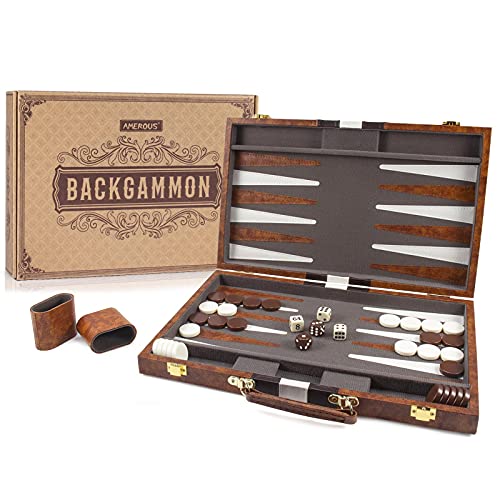
- COMPLETE BACKGAMMON SET – AMEROUS latest classic backgammon set brings you the biggest surprise. The package includes ba…
- STIMULATE INTEREST & PERFECT ATMOSPHERE – The table backgammon game that can greatly stimulate the interest of kIds and …
- FIRST-CLASS QUALITY & EXQUISITE CRAFTSMANSHIP – This backgammon board game is made of is made of high-quality materials,…
Marble Games: Spatial Reasoning Made Tangible
ThinkFun Gravity Maze
A mesmerizing logic game that’s part marble run, part spatial puzzle, part engineering challenge. Players receive challenge cards showing a starting configuration and must figure out how to arrange towers so a marble drops through to reach the target tower. It exercises three-dimensional thinking, planning ahead, and understanding how gravity and physics work. The satisfying “click” of placing towers combined with the visual reward of watching the marble complete its run makes every solution deeply gratifying. Excellent for solo play or collaborative problem-solving. Ages 8+ will find appropriate challenges across 60 difficulty levels.

- Ignite Creativity & Problem-Solving: ThinkFun’s Gravity Maze sparks the imagination while honing critical thinking skill…
- A Hybrid of Fun & Learning for Boys and Girls Ages 8-12: The innovative Gravity Maze merges fun and education, making it…
- Endless Adventure in Every Build: Open a world of construction possibilities as kids solve marble puzzles that challenge…
Wooden Mancala
Ancient, elegant, and endlessly strategic. Mancala’s simple premise—distribute stones around a board according to specific rules—conceals sophisticated tactical depth. Experienced players can plan multiple moves ahead, setting up combinations and capturing opportunities. Yet beginners can learn the rules in minutes and play immediately. The tactile pleasure of moving smooth stones, the beautiful wooden board, and the meditative rhythm of play make mancala as calming as it is challenging. Perfect for 2 players and suitable for ages 6 to adult. A game your grandchildren might play with their grandchildren.
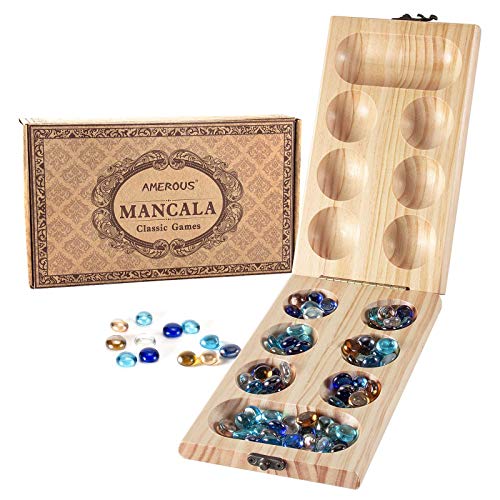
- DURABLE & SMOOTH – The mancala board game is made of premium solid and eco-friendly wood with smooth and fine texture to…
- EDUCATIONAL GAME – Looking for a game to sharpen your mind and interact with families? Here we go! The portable travel b…
- PERFECT GIFT CHOICE – Struggling to come up with a good idea for birthday/holiday gift for your loved ones? Our complete…
Preschool/Toddler Games: Building Foundations Early
Hasbro Gaming Candy Land
The classic first board game that’s introduced generations of children to gaming concepts. Candy Land teaches color recognition, turn-taking, following rules, and graceful winning/losing—all without requiring reading skills or complex strategy. For parents and grandparents, it’s an opportunity to model good sportsmanship and enthusiasm. While adults might find it repetitive, watching a three-year-old’s face light up when they draw a special card makes every game worthwhile. Perfect for 2-4 players ages 3+ and an essential foundation for future game learning.

- CLASSIC BEGINNER GAME: Do you remember playing Candy Land when you were a kid. Introduce new generations to this sweet k…
- RACE TO THE CASTLE: Players encounter all kinds of “delicious” surprises as they move their cute gingerbread man pawn ar…
- NO READING REQUIRED TO PLAY: For kids ages 3 and up, Candy Land can be a great game for kids who haven’t learned how to …
HABA My Very First Games – First Orchard Toddler Game
A cooperative game specifically designed for toddlers that’s genuinely well-crafted. Players work together to pick fruit from trees before a raven reaches the orchard. The large wooden pieces are perfectly sized for small hands, the simple rules teach color matching and basic strategy, and the cooperative structure means everyone wins or loses together—eliminating tears over losing. It’s a gentle introduction to gaming that respects young children’s developmental stage while teaching valuable skills. Ideal for 1-4 players ages 2+ and beloved by parents who appreciate thoughtful game design.

- EXCITING PLAYTIME: These toddler board games for 2+ year olds have been enjoyed by families for over 30 years with over …
- DEVELOP SKILLS: Our First Orchard toddler games ages 2-4, help develop social skills such as taking turns and following …
- FAMILY TIME: Designed by educators, these board games for 2 year olds are ideal for family time. In these games for todd…
Tips for Successful Game Learning
Starting your game-learning journey successfully requires the right approach. Here’s how to set yourself up for long-term enjoyment:
Start simple, build gradually. Choose games with complexity appropriate to your experience level. Master simpler games before tackling heavier strategy games. There’s no shame in starting with classics—they’re classics for a reason. As your comfort with gaming concepts grows, you’ll naturally be drawn to more complex challenges.
Read rules together, play forgivingly. For your first playthrough, agree upfront that mistakes are expected and rule lookups are encouraged. Consider the first game a learning game where perfect play isn’t the goal—understanding is. Many families play the first round “open hand” with cards visible to allow collaborative learning.
Watch tutorial videos. For more complex games, YouTube tutorial videos can clarify rules faster than reading manuals. Seeing gameplay in action makes abstract rules concrete. Many game publishers provide official tutorials that walk through setup and first turns.
Create your New Year’s Eve tradition. Following my family’s lead, consider making game learning a yearly ritual. Choose one night—New Year’s Eve, a birthday, the first snow—and commit to learning something new together. The anticipation builds throughout the year, and the tradition becomes something everyone looks forward to.
Rotate who chooses. If playing with family or a regular group, take turns selecting which game to learn next. This ensures everyone’s interests are represented and prevents one person’s preferences from dominating. It also means everyone gets to research, choose, and teach—valuable skills in themselves.
Keep a game journal. Note which games you learned, when you played them, who won, and any house rules you developed. This creates a lovely record of your gaming journey and helps you remember which games your group enjoyed most. It’s also fun to look back at your first impressions compared to your feelings after dozens of plays.
Build a lending library. As your collection grows, become the friend who lends games. This spreads the joy, helps others discover gaming, and gives you feedback on which games resonate with different groups. Plus, explaining rules to new players deepens your own understanding.
Your New Year, One Game at a Time
Learning new games isn’t about becoming a competitive champion or amassing a massive collection. It’s about choosing curiosity over passive entertainment. It’s about creating traditions that bring people together. It’s about exercising your brain in ways that feel like play rather than work.
As you consider your goals for 2026, remember that the most sustainable resolutions are the ones that add joy rather than demands to your life. Learning games delivers cognitive benefits while creating laughter, connection, and memories. It’s self-improvement disguised as fun.
So this New Year’s Eve—or any evening in January—push aside the screens, open a game box you’ve never played, and stumble through those rules together. Argue about interpretations. Make mistakes. Laugh at improbable dice rolls. Celebrate clever plays and outrageous luck.
Because years from now, you won’t remember what show you binged or what you scrolled past. But you’ll remember the night you learned Ticket to Ride and your daughter built a transcontinental railway empire. You’ll remember teaching your grandmother Spy Alley and watching her bluff like a professional poker player. You’ll remember the New Year’s Eve you introduced Forbidden Island and everyone worked together to beat the rising waters.
Those are the memories that matter. Those are the traditions worth starting.
The game box is waiting. The new year is here. Your move.
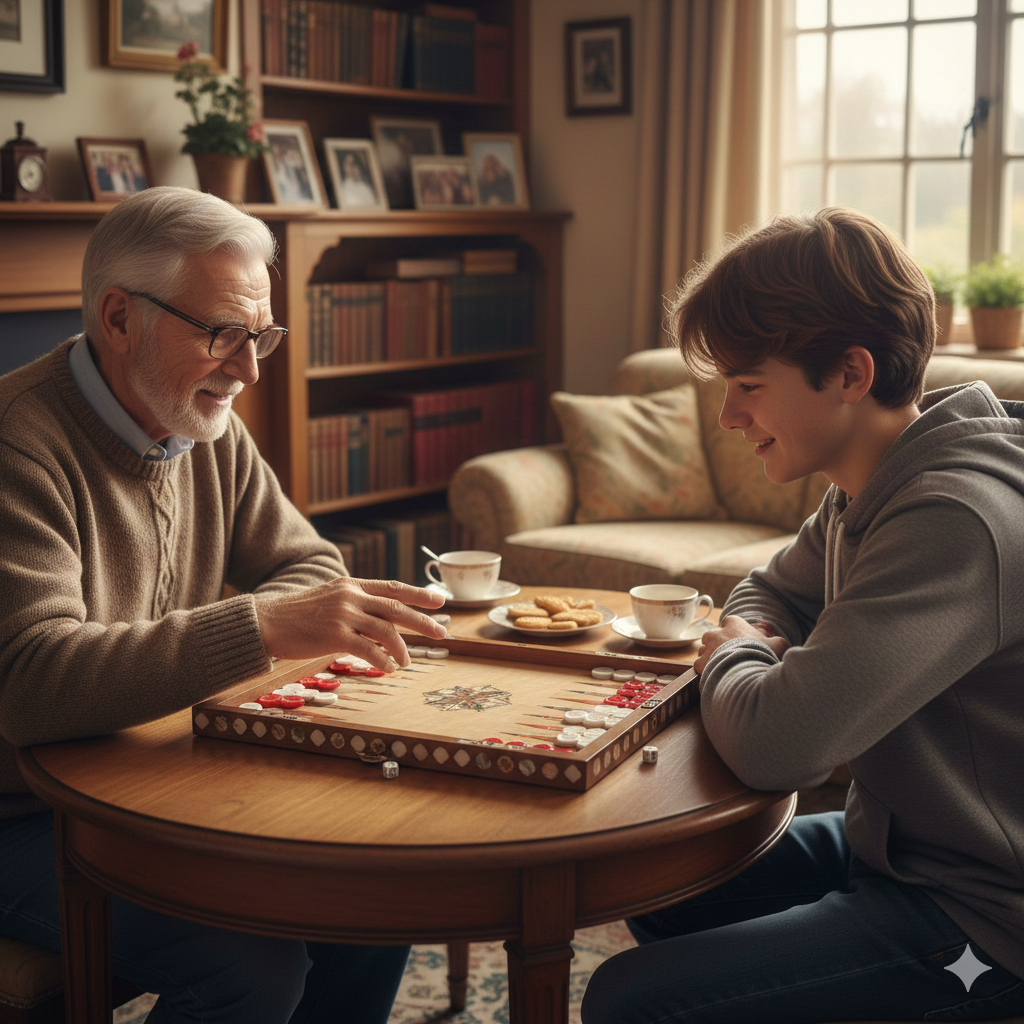
Happy New Year from our family to yours!!
Disclosure: This post contains affiliate links, which means I may earn a small commission if you make a purchase through these links, at no additional cost to you. I only recommend products I genuinely believe support executive function development and that have proven educational value. Your support helps me continue creating helpful content in this problem-solving series!